Use of Force
By Rachel Moss
Throwing a Pillow Is a Use of Force?
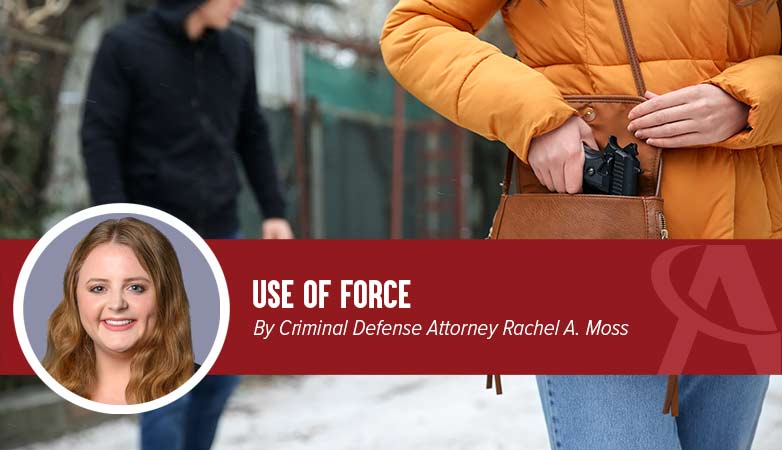
A punch, a kick, a gunshot, throwing a pillow at someone’s head. These are all things that have been classified as a “use of force.”
The term “use of force” is often used when talking about self-defense. When you put it in legalese, self-defense is defined as a person being justified in threatening or using physical force against another when and to the extent a reasonable person would believe it immediately necessary to protect himself against the other1s use or attempted use of unlawful physical force. That is definitely a mouthful, so what does use of force actually mean? Let’s break down how “use of force” is defined under the law, including reviewing the different types of force.
What Does “Use of Force” Mean?
A “use of force” typically refers to an individual directing either ordinary physical force or deadly physical force against another.

Ordinary physical force means the force used upon or directed toward the body of another person.2 Examples of ordinary physical force include pushing someone, hitting someone, or throwing water on someone. An action can be considered a use of force even when contact is not made. For example, throwing an object at someone, but missing, would still be deemed a use of force. Confinement is also considered a use of force; if an aggressor is holding someone back or restraining another, then that aggressor is using force.
When someone uses ordinary physical force, they often risk less serious criminal charges, such as misdemeanors. Common charges involving ordinary physical force include Assault and Disorderly Conduct. While ordinary physical force is sufficient to face legal consequences, deadly physical force can lead to much more serious penalties.
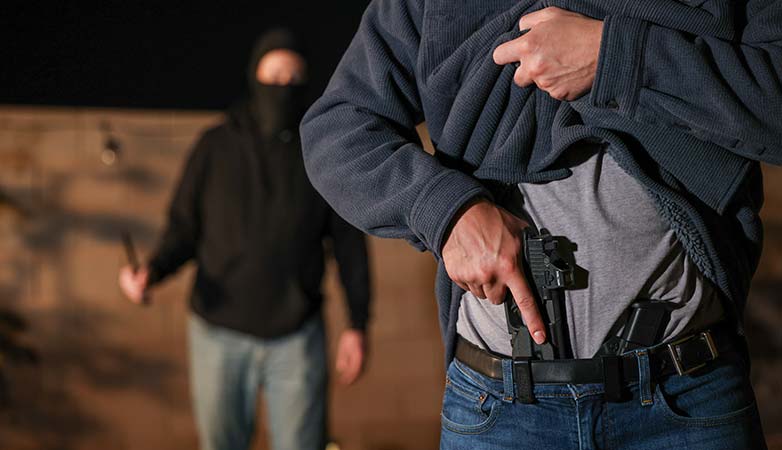
Deadly physical force is force used in a way that creates a substantial risk of causing death or serious physical injury, or that is intended to cause death or serious physical injury. Deadly physical force includes using a deadly weapon or dangerous instrument against another person, but does not require it. For example, if an attacker chokes another person, the attacker is using deadly physical force. Even though the attacker used no weapon or dangerous instrument, the attacker’s force created a substantial risk of serious physical injury or death.
Most states define serious physical injury (sometimes referred to as “serious bodily harm” or “substantial bodily injury”) as physical injuries that create a reasonable risk of death, cause serious and permanent disfigurement, result in serious impairment of health, or impair the function of any bodily organ or limb.3 Therefore, breaking someone’s bone, while not causing death, would still be classified as “deadly physical force” under the law because it resulted in a “serious physical injury.”
Deadly physical force is particularly easy to spot when an aggressor uses a deadly weapon or dangerous instrument. For example, in Arizona, a deadly weapon4 means anything designed for lethal use, including a firearm. Other examples of deadly weapons include knives, swords, and bombs.
In contrast, Arizona defines dangerous instrument as “anything that under the circumstances in which it is used, attempted to be used or threatened to be used is readily capable of causing death or serious physical injury.”5 Arizona courts have found dangerous instruments to include fire, automobiles, and even pickle jar openers. In states like Arizona, a jury determines if something qualifies as a dangerous instrument. Arizona courts have noted juries could potentially find objects like tennis shoes or socks to be dangerous instruments under the right circumstances. An easy way to think about it is that not all tennis shoes are automatically dangerous instruments, but a tennis shoe, when used to seriously harm someone, becomes a dangerous instrument.
Someone who uses deadly physical force could face charges such as Murder or Aggravated Assault. Deadly physical force incidents are more serious than ordinary physical force incidents, typically resulting in felony charges. If convicted, penalties can include serious prison time, or, in extreme cases, the death penalty.
Sometimes, it is clear cut to determine whether a use of force constituted ordinary physical force or deadly physical force. However, the lines between the types of force can be blurred. A common question I get is whether someone can use their gun to protect themselves if someone punches them. I then must give the infamous “it depends” answer. Not all punches are created equal, and not all victims are created equal. For example, if the aggressor is a six-year-old girl punching a six-foot-tall man, it is easy to say he is facing ordinary physical force. However, if you reverse the scenario, the little girl would pretty clearly be at risk of serious physical injury or death, AKA, facing deadly physical force. The situation becomes much more difficult if you pit two six-foot-tall men against each other. Many would argue a man can cause a serious physical injury by punching another, but nothing guarantees a jury would agree with you. Keep in mind – if you find yourself in a self-defense situation, your actions might be reviewed by a jury, and they will have to determine if you acted reasonably and proportionately.
What If I Need to Use Force?

If you ever need to use force to protect yourself, your priority is maintaining your safety. If human life is in danger, first call 911. When calling 911, only tell them there was a shooting, medical attention is needed, and the incident location. Then, if you are a member, call Attorneys On Retainer. We will help guide you through the critical next steps after a self-defense incident.
Attorneys On Retainer is a program designed to support your legal needs after a self-defense incident. Learn about Attorneys On Retainer here. You can also learn about Attorneys For Freedom, the only law firm in the nation exclusively committed to self-defense cases, here.
About the Author
Criminal Defense Attorney Rachel A. Moss

Rachel Moss is a criminal defense attorney and author of The Attorneys On Retainer blogs. With a dedication to defending her clients and supporting the liberty movement, Rachel believes in giving people second chances to their freedom and fights for justice.
All Posts by Rachel A. Moss | Rachel A. Moss's Full BioHave a Question About AOR Membership?
Our team is ready to walk you through your options. Fill out the form and we’ll be in touch shortly.
Related Content