Modify Your Gun. Modify Your Defense.
How firearm upgrades intended to make you safer could become evidence against you.
By Howard A. Snader, Esq.
Responsible Ownership or Government Regulation?
Most responsible gun owners don’t need the government to tell them to keep firearms away from children or unauthorized users. They understand that responsibility comes with ownership. But lawmakers across the country have enacted firearm storage laws that go beyond encouraging responsible behavior. Some impose criminal penalties when a child gains access to an unsecured firearm. Others impose liability based on the likelihood of access, even when no one is injured.
Supporters argue these laws save lives. Opponents question whether additional criminal penalties are necessary to accomplish what responsible gun owners should already be doing. So what does the evidence actually tell us? And what should gun owners understand about these laws?
Your Nightstand Gun—Who Else Can Grab It?

Situation #1: It’s 1:00 a.m. You hear glass breaking downstairs. Someone is entering your home. You reach into your nightstand, retrieve your handgun, and prepare to defend your family.
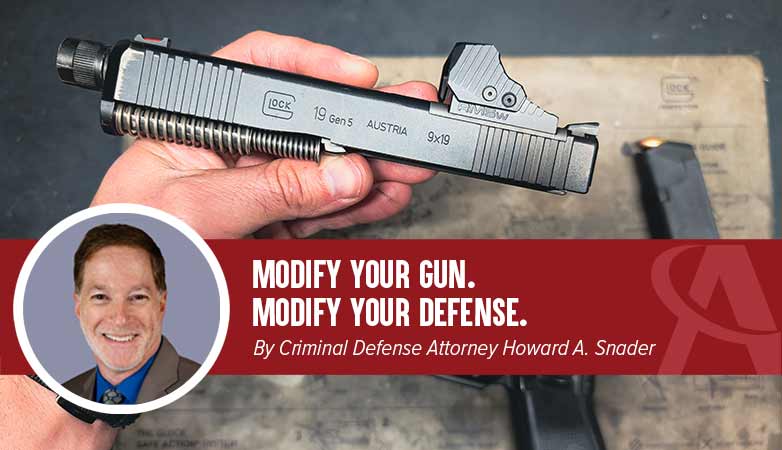
Situation #2: It’s Saturday afternoon. Your eight-year-old grandson is visiting. While you’re outside working in the garage, he wanders into your bedroom, opens the nightstand, and discovers that same loaded handgun.
Two situations. One firearm. Two very different risks.
The first illustrates why Americans keep firearms readily available for self-defense. The second illustrates why responsible storage matters. But does recognizing those risks necessarily mean the government should decide how you store your firearm?
Do the Numbers Justify the Laws?
Supporters of safe storage laws frequently point to research suggesting these laws save lives. But do the statistics actually prove that government mandates are responsible? A 2020 study published in JAMA Pediatrics examined firearm deaths among children ages 0–14 from 1991 through 2016. Researchers reported that states with certain child-access-prevention laws experienced approximately 13% lower firearm death rates.
Interestingly, the study found that stricter laws imposing liability when a child could access an improperly stored firearm were associated with greater reductions in firearm deaths than less restrictive laws. However, the study found no statistically significant reduction in firearm deaths in states where the law penalized adults for recklessly giving children access to firearms. Those findings deserve attention. But so do the study’s limitations.
Correlation Does Not Establish Causation
The researchers could not determine whether individual gun owners changed their behavior because of these laws, how consistently the laws were enforced, or whether other differences between states influenced the results. Nor did the study establish whether voluntary education, responsible storage practices, or other safety measures could achieve comparable results.
The evidence suggests that certain storage laws may save lives. But it does not establish that criminal penalties are necessary to achieve those benefits, or that every government mandate is equally effective.
When Does Unsafe Become Illegal?

Not all firearm storage laws operate the same way. Some states impose criminal liability when a child actually gains access to an improperly secured firearm (e.g., Texas, Delaware, and New Jersey). Others may impose liability when a child is likely to gain access to the firearm, even if the child never touches the firearm (e.g., California, Minnesota, and Nevada). Still, other laws impose broader requirements concerning how firearms must be stored, sometimes regardless of whether children are present.
Consider two homeowners. One leaves a loaded handgun on the kitchen counter, knowing that young children are playing nearby. Another lives alone, keeps a handgun in his bedside nightstand, and wants immediate access should someone break into his home. Should the law treat those situations identically?
Most gun owners would recognize a substantial difference between the two. But the answer under criminal law depends on the specific statute, its exceptions, and the circumstances. Some laws focus on what happens after a child obtains a firearm. Others attempt to prevent access by criminalizing certain storage practices before anything happens. That distinction raises a legitimate question: When should irresponsible behavior become criminal behavior?
Criminal laws frequently prohibit conduct that responsible people would never engage in. The fact that responsible gun owners already secure their firearms does not, by itself, establish that storage laws are unnecessary. But neither does the existence of a legitimate safety concern automatically justify every criminal penalty enacted in its name.
Mandatory storage laws also raise Second Amendment questions, particularly when they interfere with immediate access to firearms for self-defense. Those constitutional questions deserve a separate discussion; our focus here is on what these laws accomplish and what conduct they criminalize.
When Seconds Count, Access Matters
For many Americans, keeping a firearm is about protecting themselves and their families. A firearm locked away where it cannot be accessed during an emergency may offer little immediate protection. On the other hand, a firearm that anyone can access creates an entirely different danger. These concerns are not necessarily mutually exclusive. Modern quick-access safes and lockboxes can help prevent unauthorized access while allowing relatively rapid access during an emergency. Owners should understand their equipment and its limitations. My advice to clients is straightforward:
When children are present, your firearm should either be securely on your person or locked away.
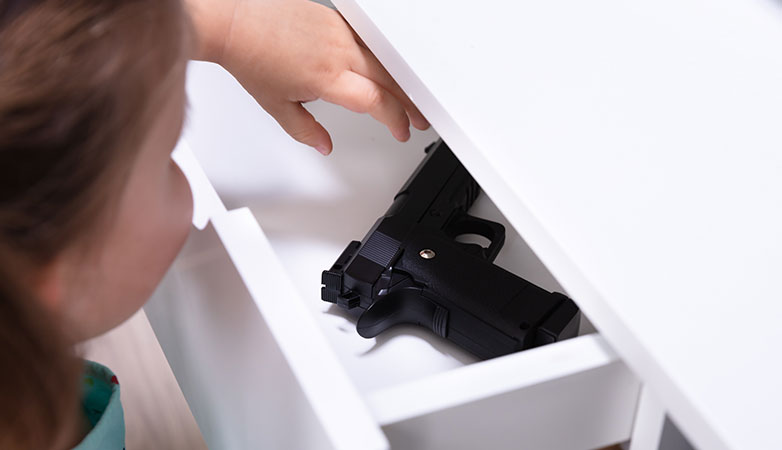
Not sitting on a dresser. Not left unattended in a holster. Not hidden somewhere you assume a child won’t look. Children are curious. Leaving a firearm accessible to them is an unnecessary gamble.
Safety First. Mandates Second?
Firearm safety education, responsible parenting, secure storage equipment, and voluntary training all have important roles. But we should not assume that voluntary measures are as effective as mandatory laws without evidence supporting that conclusion. Likewise, evidence that some laws reduce injuries does not resolve questions about how broadly those laws should be written or when criminal penalties are appropriate. The distinction between responsible conduct and government mandates deserves careful consideration.
Your Rights. Your Responsibilities.

Responsible firearm storage is not a new concept, and it shouldn’t take the threat of criminal prosecution to convince gun owners to keep their firearms out of unauthorized hands. But the existence of a legitimate safety concern does not automatically justify every law enacted in its name. The evidence suggests that certain child-access-prevention laws are associated with fewer firearm deaths. It does not establish that every storage mandate is equally effective or necessary.
Gun owners should understand the laws where they live, the conduct those laws prohibit, and the responsibilities that come with firearm ownership. When children are present, my advice remains simple: Your firearm should either be securely on your person or locked away. Not because the government tells you to, but because responsible gun ownership demands it.
About the Author
Senior Criminal Defense Attorney

Howard joined Attorneys For Freedom to continue his focus on providing vigorous defense, with special emphasis on self-defense cases and protecting constitutional rights. His practice blends relentless courtroom advocacy, creative problem-solving, and disciplined case management.
All Posts by Howard A. Snader | Howard A. Snader's Full BioHave a Question About AOR Membership?
Our team is ready to walk you through your options. Fill out the form and we’ll be in touch shortly.
Related Content