Does Overpenetration Matter in a Self-Defense Shooting?
By Howard A. Snader
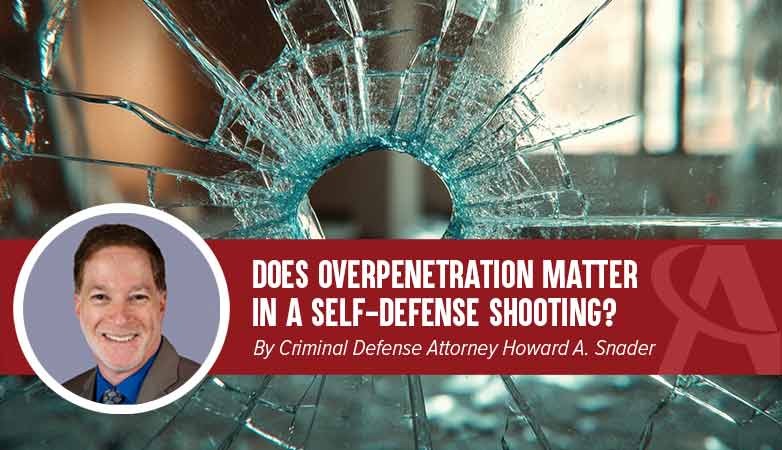
The shooting is over. Your ears are ringing, your hands are shaking, and there is a man lying on your living room floor who, seconds earlier, was coming toward you with a weapon. Your spouse and children are safe, and the police are on their way. You did exactly what you believed you had to do, and you are alive because of it. However, someone begins pounding on your front door. It’s your neighbor, and he isn’t coming to help. He is screaming that his daughter has been shot. One of the rounds you fired struck your attacker, passed through his body, continued through a wall, and entered the house next door. A bullet you were completely justified in firing at one human being has now struck another human being, whom you had absolutely no justification to shoot.
Now the questions change. Was the original shooting still justified? Can you be criminally prosecuted for injuring—or killing—the innocent person? Does it matter that the bullet first passed through the attacker? Would the law treat the situation differently if you had simply missed? And even if the shooting is ultimately ruled justified, could you still face a civil lawsuit? Gun owners spend enormous amounts of time discussing overpenetration as a ballistic problem. Perhaps we should spend more time thinking about it as a legal one.
A Bullet Has a Life After the Trigger Pull
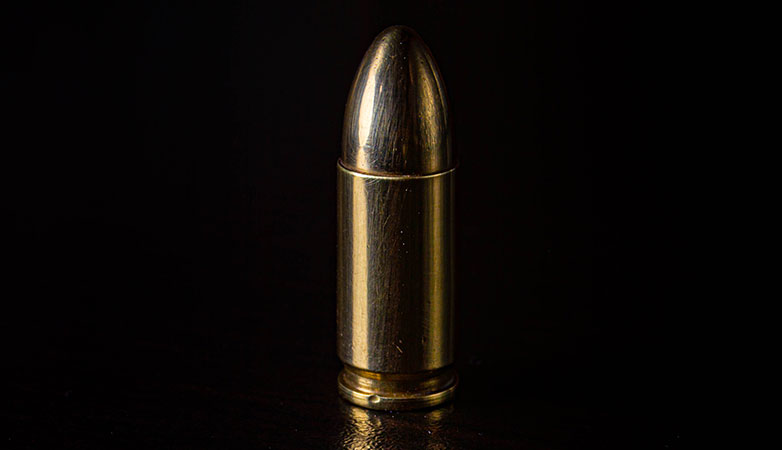
Discussions about defensive ammunition are usually dominated by terminal performance. Shooters debate expansion, penetration depth, velocity, bullet weight, barrier performance, and whether one caliber offers some meaningful advantage over another. Those are legitimate subjects. A lawyer investigating a defensive shooting eventually has to ask a much simpler question: Where did every bullet go?
That question matters because pulling the trigger is only the beginning of the bullet’s journey. Every projectile fired in a defensive encounter continues creating consequences until it finally stops. Suppose an armed robber points a handgun at you, and you reasonably believe he is about to kill you. You fire and your bullet strikes him and stops the threat. Assuming the other requirements of your jurisdiction’s self-defense law have been satisfied, we have a classic case for the justified use of deadly force.
Now change one fact. The bullet passes through the robber and strikes the cashier standing behind him. The justification for firing at the robber has not magically disappeared. At the instant you pulled the trigger, you still faced the same lethal threat. But there is now a second victim and, potentially, a second legal question. You were justified in using deadly force against the robber. What justified the injury to the cashier? That is where the analysis becomes considerably more complicated.
The Rules We Learned on Day One
Almost every responsible gun owner was taught some version of the basic rules of firearm safety:
- Treat every firearm as though it is loaded.
- Never allow the muzzle to cover anything you are not willing to destroy.
- Keep your finger off the trigger until you are ready to fire.
- Be sure of your target and what is beyond it.
That last rule deserves considerably more attention in the context of defensive gun use. On a shooting range, knowing your backstop is easy. The target hangs in front of a purpose-built structure designed to absorb bullets. You know where the projectile should go if it passes through the paper. You know where it should go if you miss. Life doesn’t provide engineered backstops.
Your backstop might be drywall, a window, the exterior wall of your house, a parked automobile, a convenience store cooler, another apartment, or another human being. “Know your target and what is beyond it” isn’t merely advice for avoiding an accident at the range. It reflects a fundamental reality of firearm use: You are launching a projectile into an environment that may contain people you cannot afford to hit. That matters tactically. It matters morally. And after a shooting, it can matter legally.
What Exactly Is Your Backstop?
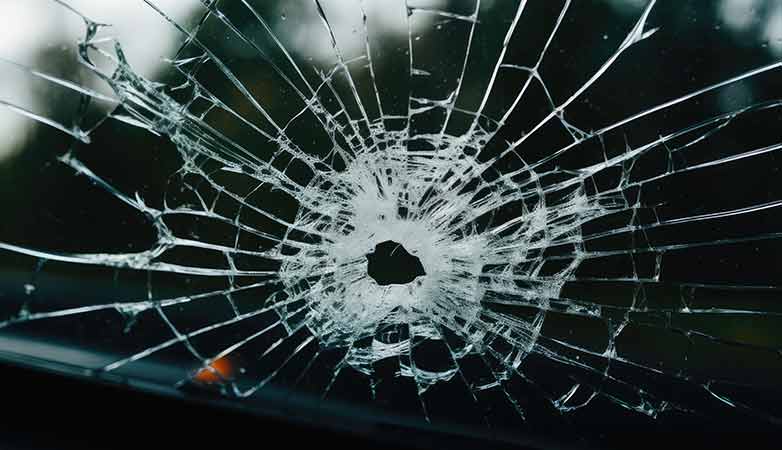
Ask a shooter about his defensive ammunition, and he may be able to tell you the bullet weight, manufacturer, advertised velocity, and expansion diameter. Ask him what is behind the wall across from his bedroom door at 2:00 in the morning; the answer may be less immediate. That is a problem. For anyone who keeps a firearm for home defense, understanding the physical environment should be part of the defensive plan.
Where are the bedrooms? Where do your children sleep? Where is your spouse likely to be? Which directions lead toward neighboring homes? Which walls separate you from another apartment? Where are the windows? What lies outside them? What areas of your home would present the worst possible direction in which to fire? And which locations might provide safer angles if circumstances permitted you to move?
None of this guarantees what will happen during an actual violent encounter. Your attacker gets a vote. You may awaken in darkness. You may be forced to respond from a terrible position. You may have no realistic opportunity to move. But there is a profound difference between discovering your environment during a gunfight and having thought about it beforehand. Knowing your backstop doesn’t mean you can always choose it. It means you understand the consequences when you cannot.
Justified Does Not Necessarily Mean Immune From Everything That Follows
There is no single American law governing the innocent-bystander problem. Self-defense law is largely a matter of state law, applicable statutes, jury instructions, and appellate decisions, which can differ significantly from one jurisdiction to another. But the distinction between the intended attacker and an innocent third person is real. In other words, a prosecutor could potentially accept the proposition that you had every right to shoot the person trying to kill you while still asking whether you acted recklessly toward the innocent person your bullet ultimately struck. That sounds contradictory until we change the hypothetical.
Imagine that someone begins shooting at you from across a crowded restaurant, and you return fire. Nobody seriously expects you to perform a geometry calculation while bullets are coming toward you. But now imagine firing repeatedly across that crowded restaurant without regard for the people directly behind your attacker. The fact that someone was trying to kill you remains enormously important. However, it does not necessarily make everything you do in response legally reasonable. And suddenly that basic firearm safety rule becomes relevant again: What was beyond your target?
“I Didn’t Mean to Shoot That Person”
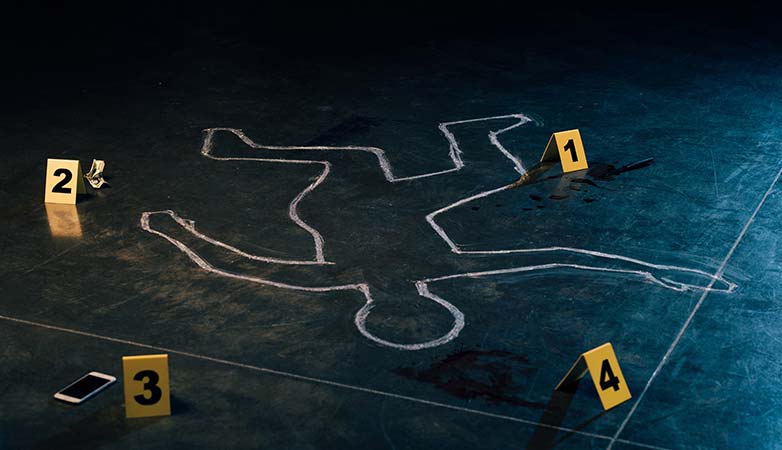
The natural response to the innocent-bystander hypothetical is obvious: But I didn’t intend to shoot the bystander. Of course not, and intent matters. But intent is not the only mental state recognized by criminal law. Depending on the jurisdiction and offense being considered, criminal liability can also arise from reckless or criminally negligent conduct. Those terms have specific legal definitions that vary by jurisdiction. That distinction matters because a prosecutor may not need to prove that you wanted to hurt the innocent person. The relevant question could instead become whether the manner in which you used the firearm created a legally unacceptable risk to that person.
Suddenly facts that seemed insignificant during the shooting become important. Where was the attacker standing? What was behind him? Could you see beyond him? Did you know other people were there? How many rounds did you fire? From what position? At what angle? Was the attacker moving? Were you moving? What ammunition were you using? Where did each projectile ultimately stop? And most importantly, did the threat continue throughout the entire sequence of fire? You experienced those facts simultaneously, under extreme stress, perhaps in only a few seconds. The investigators get considerably more time.
You Get Seconds. They Get Months.
This is one of the uncomfortable realities of any defensive shooting. The defender experiences the event at full speed. Investigators, prosecutors, experts, and eventually jurors may examine it in slow motion. A person may have only seconds to recognize a lethal threat, decide whether deadly force is necessary, draw a firearm, move, aim, and fire. There is no opportunity to freeze the scene and inspect the background. Afterward, everyone else effectively gets that opportunity. Investigators can photograph bullet impacts and measure trajectories. Medical examiners can document wound paths. Firearms examiners can identify ammunition and projectiles. Surveillance recordings can be viewed repeatedly frame by frame. Witnesses can be interviewed separately. Attorneys can spend months analyzing decisions the defender made in fractions of a second.
Those circumstances do not establish guilt. The surrounding circumstances remain critical, and someone defending against an imminent deadly threat may have had no reasonable alternative. But they demonstrate why firearm safety principles and legal analysis can eventually collide. The rules you learned on your first day at the range may become facts discussed on your first day in court.
Missing May Matter More Than the Pass-Through

There is an irony in the obsession with overpenetration. A bullet that passes through an attacker has at least transferred some of its energy while passing through the intended target. A bullet that completely misses has not. It simply keeps going until something stops it. Your wall, your neighbor’s wall, your son’s bedroom, or someone walking down the sidewalk. That is why the backstop rule deserves to be treated as something more important than a sentence recited during a basic firearms class.
A defensive shooter cannot guarantee that every round will strike its intended target. Real violent encounters are dynamic. Attackers move. Defenders move. Distance changes. Lighting may be poor. The defender may be injured. Innocent people may suddenly enter the background. But those realities make the rule more important, not less. The question isn’t merely: Can I hit the attacker? It is: What happens if I don’t?
Criminal Court May Not Be the End of It
There is one final misconception worth addressing. A finding that a shooting was legally justified does not automatically answer every possible question of civil liability. Criminal and civil proceedings operate under different rules, causes of action, and burdens. States also differ significantly in the civil protections or immunities they provide to people whose use of force was legally justified. The details are jurisdiction-specific, but the practical lesson is straightforward: “Good shoot” is not a universal legal force field.
A defensive shooting can generate a criminal investigation, possible prosecution, civil litigation, and other legal consequences. The encounter itself may last only seconds. Its legal aftermath can continue for years. Which brings us back to the living room. The attacker is down. Your family is alive. The police are coming. But there is an ambulance outside your neighbor’s house because one of your bullets traveled farther than you ever intended. Was the shooting a success? Tactically, perhaps. You survived the encounter. Legally, perhaps. Your decision to use deadly force against the attacker may have been completely justified. But the analysis may not stop with the attacker. That is the real reason overpenetration matters.
It matters because pulling the trigger is not the end of your responsibility for that bullet. We train to recognize the threat. We train to draw. We train to put rounds on target. We argue endlessly about which gun to carry and which ammunition to put in it. But one of the most important lessons was probably taught before we learned any of those things. Know your target and what is beyond it. On the range, that rule keeps holes out of things that shouldn’t have holes in them. In a defensive shooting, it can mean considerably more. Know your home, where your family sleeps, your likely shooting angles, what separates you from your neighbors, what your ammunition is capable of penetrating, and when circumstances give you a choice, know your backstop.
Because after a defensive shooting, investigators may ask a lot of questions. Why did you fire? Was deadly force necessary? Was the threat still present? What could you see? What did you know? What was behind your target? And where did every bullet go? The question, then, isn’t merely whether overpenetration matters. The harder question is what happens when a bullet you were legally justified in firing at one person strikes someone you were never legally justified in shooting. That is where the ballistic discussion ends, and the legal one begins.
About the Author
Senior Criminal Defense Attorney

Howard joined Attorneys For Freedom to continue his focus on providing vigorous defense, with special emphasis on self-defense cases and protecting constitutional rights. His practice blends relentless courtroom advocacy, creative problem-solving, and disciplined case management.
All Posts by Howard A. Snader | Howard A. Snader's Full BioHave a Question About AOR Membership?
Our team is ready to walk you through your options. Fill out the form and we’ll be in touch shortly.