

Does Overpenetration Matter in a Self-Defense Shooting?
When a bullet passes through an attacker and strikes someone else, being justified in shooting the original threat doesn't automatically cover what happens to that innocent bystander, since prosecutors can separately look at whether the shooter acted recklessly with the shot itself. The article walks through why "know your target and what is beyond it" is as much a legal principle as a range safety rule, and why a criminally justified shooting still doesn't shield someone from potential civil liability for anyone hit downrange.
Read More
Can You Go to Jail Even if it was Self-Defense? Absolutely Yes.
You did everything right. You were in real danger, you defended yourself, and the threat is gone. But being right and being able to prove it are two very different fights, and Attorney Howard A. Snader breaks down why self-defense claims can still land you in handcuffs, in court, and in front of a jury months later.
Read More
Justice or Just Luck?
A ten second bar fight ends fast, but deciding whether it was self-defense or a crime can take months, and it often comes down to one prosecutor asking a single question: what would twelve jurors think? This piece breaks down exactly what prosecutors weigh when they're deciding whether to charge you, and why the same set of facts can go two very different ways depending on who's reviewing them.
Read More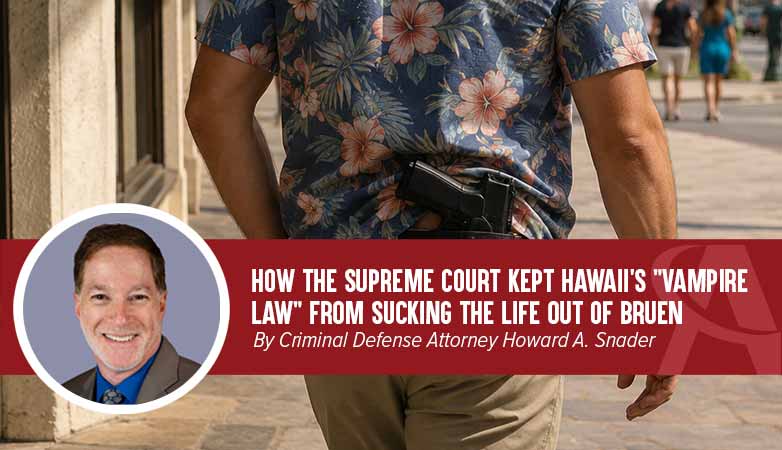
How the Supreme Court Kept Hawaii's "Vampire Law" From Sucking the Life Out of Bruen
Hawaii tried to get around the Supreme Court's Bruen ruling with a sneaky workaround: instead of banning concealed carry outright, it flipped the rule so every business was off limits to gun owners unless the owner said otherwise. AFF attorney Howard A. Snader breaks down how the Supreme Court saw through the trick in Wolford v. Lopez, and what it means for gun owners going forward.
Read More